The Best AI Invoicing Software 2026: Contract-to-Cash Automation
Discover the best AI invoicing software 2026 has to offer. Move beyond basic PDFs with full contract-to-cash automation, MCP integration, and usage-based billing.

Key Takeaways
- The landscape has changed: The best AI invoicing software 2026 has to offer isn't just a glorified PDF generator with a basic OCR spell-check. It’s about full, hands-free, contract-to-cash automation that transforms your finance operations.
- MCP is the new standard: Model Context Protocol (MCP) is the MVP of 2026. It lets AI assistants seamlessly read your contracts, query billing rules, and update accounting records without those brittle, duct-taped API integrations we all secretly hate.
- AP vs. AR distinction: Stop confusing Accounts Payable (hemorrhaging cash) with Accounts Receivable (making it rain). Modern machine learning tools are highly specialized, so you must pick the right weapon for the right job.
- Usage-based billing is everywhere: Rigid SaaS subscriptions are practically dial-up internet at this point. The top platforms natively handle hybrid, metered, and usage-based pricing models via automated billing intelligence.
- ERP sync is non-negotiable: If your automated finance stack doesn't seamlessly reconcile with NetSuite, QuickBooks, or Xero, it’s not a solution. It’s just creating a soul-crushing data entry purgatory for your team.
Look, finding the best AI invoicing software 2026 has to offer is no longer about picking the app with the prettiest invoice templates or the cheapest credit card processing fees. If you're out here searching for a basic "smart invoice generator," you are missing out on a massive, tectonic shift in finance ops. Expecting a simple PDF creator to run your 2026 revenue engine is like bringing a spoon to a lightsaber fight.
Let's be real for a second. Finance teams are under immense pressure to reduce manual AP/AR work, close the books faster, and stop bleeding revenue to manual copy-pasting errors. Today, the heavy-hitting AI invoicing tools don't just generate a bill—they plug directly into the nervous system of your business.
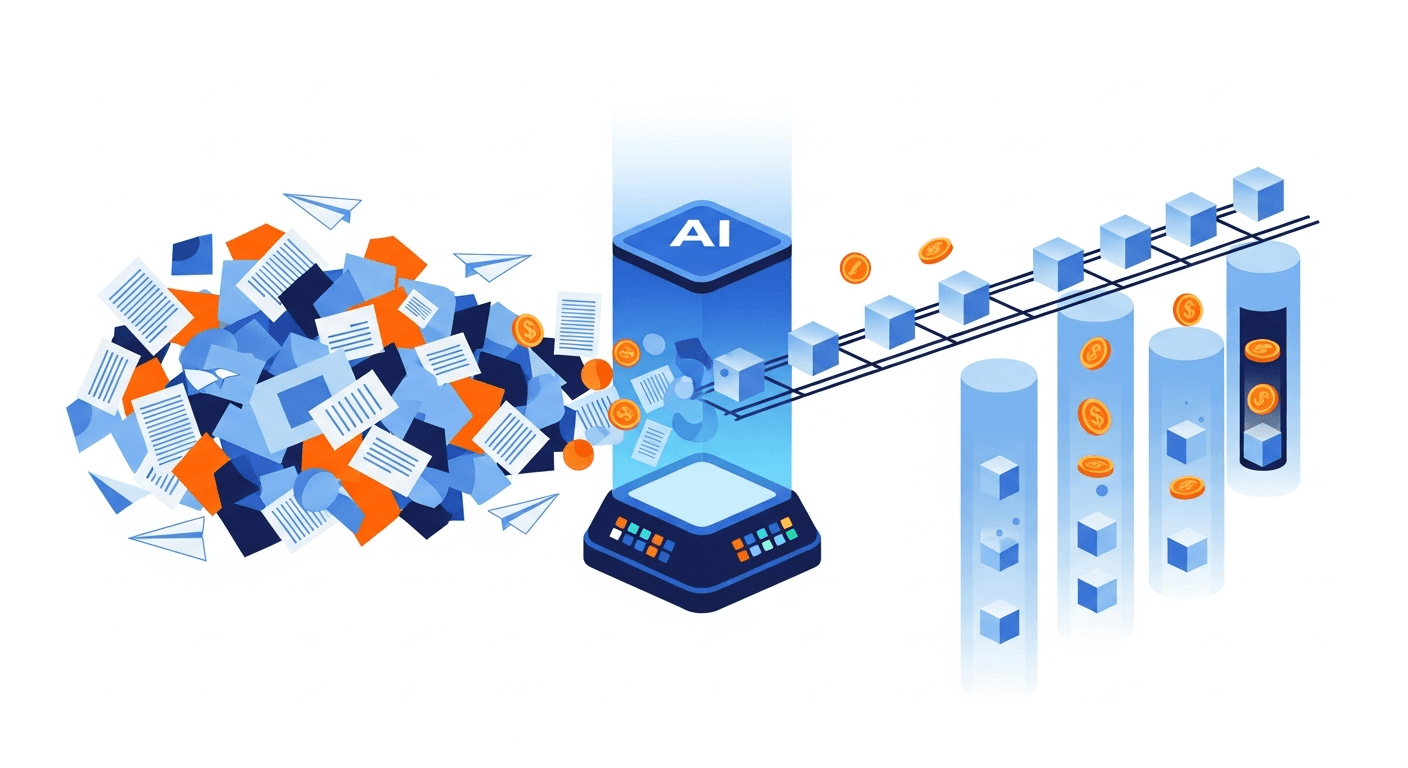
Through AI-native integrations and the Model Context Protocol (MCP), these tools automatically extract billing terms from signed contracts and calculate complex usage-based pricing. They also route approvals and reconcile payments in your ERP. The best part? Zero human intervention is required.
If your current "process" still involves manually reviewing contracts, wrangling spreadsheet billing, or copy-pasting Stripe data into NetSuite like it’s 2014, you don’t need a basic app. You need an AI-native accounts receivable automation intervention. For a glimpse into how advanced these solutions are, consider the capabilities of an invoice management AI agent in 2025.
Pull up a chair. Let’s dive into what makes a modern billing platform truly "AI-powered" and look at the absolute best tools on the market this year. You might even consider what the top Freshbooks alternatives for freelancers are, as they begin to incorporate more AI features.
Table of Contents
- The Secret Weapon: Why MCP Matters in AI Invoicing
- AP vs. AR: Clearing Up the Confusion
- What to Look for in the Best AI Invoicing Software 2026
- Best AI Invoicing Software 2026: The Top 9 Tools Ranked
- Implementation Checklist: How to Evaluate Your Next Tool
- Frequently Asked Questions (FAQ)
- Conclusion: Welcome to the Future of Invoicing
The Secret Weapon: Why MCP Matters in AI Invoicing
If you’re reading software listicles that don't mention Model Context Protocol (MCP), you’re reading ancient history. Mastering MCP invoicing is the single biggest technological leap for finance ops in 2026. You can even set up an invoice MCP server to manage this!
What is MCP, and why should you care? Think of it this way: Historically, software connected via APIs, requiring developers to build rigid, point-to-point integrations. It was basically software passing notes in class. If one system changed a rule, the whole chain broke.
MCP changes the game entirely. It’s like giving your AI a VIP backstage pass to your tech stack. It exposes structured context and actions directly to AI assistants, allowing them to fluidly hop across your systems. With an MCP-ready invoicing platform, your AI can:
- Read invoice context natively from an email or Slack message.
- Query billing rules directly from your CRM or database.
- Draft invoices based on complex, multi-variable usage data without batting a digital eye.
- Trigger follow-ups for overdue payments with personalized, context-aware emails.
- Update accounting records securely in your ledger.
Buyers in 2026 are completely over static SaaS tools. They want agentic workflows. MCP-enabled software doesn't just pass data back and forth; it empowers machine learning to understand the actual meaning of a contract and execute the billing cycle autonomously.
AP vs. AR: Clearing Up the Confusion
One of my biggest pet peeves in the software market is the constant blurring of AP and AR. Before you buy anything, you must clearly define your problem. Treating AP and AR as the same thing is like confusing an alligator with a crocodile—they both involve teeth, but one of them is eating your cash flow.
- AP Invoice Automation (Accounts Payable): Software that receives vendor bills, uses OCR to read them, routes them for internal approval, and schedules the payment. It's the bouncer at the door taking your money (e.g., Rossum, Rillion).
- AR Invoicing / Billing (Accounts Receivable): Software that generates invoices for your customers, processes their payments, and handles collections. This is the engine actually getting you paid.
- Quote-to-Cash: The holy grail of finance automation. This is the end-to-end process of generating a sales quote, converting it to an invoice, collecting the cash, and recording it perfectly in your ledger.
This guide focuses heavily on AR Invoicing and Quote-to-Cash automation, because that is where AI is driving the most mind-blowing, revenue-impacting innovation today. For more, check out our guide on how to invoice clients as a freelancer.
What to Look for in the Best AI Invoicing Software 2026
To rank the best tools, we put them through the wringer against the strict criteria modern finance teams demand. Simple templates? Yawn. Here is what you actually need to look for when evaluating the best AI invoicing software 2026 has to offer:
- Contract Intelligence: Can the system ingest signed MSAs (Master Service Agreements)—which are often written in ancient legal Elvish—and extract billing terms automatically?
- Pricing Flexibility: SaaS and AI companies treat pricing like a buffet now. Can the software handle subscriptions, seat-based pricing, consumption/usage fees, and enterprise add-ons under one roof?
- Collections Automation (Dunning): Does it act as a polite but firm digital bouncer? You want centralized AR aging, smart reminder sequences, and collections activity synced with your accounting suite.
- ERP Sync & Revenue Reconciliation: Does it sync invoices, payments, and journal entries cleanly to NetSuite, Xero, or QuickBooks? Or does it just dump CSV files on your desktop like a bad breakup text?
- Automation Depth: Does it actually reduce workload across quoting, billing, rev rec, and collections, or just move the bottleneck somewhere else?
- MCP / Agent Readiness: Can your internal AI agents securely interact with the billing system to answer questions or trigger revenue actions?
Best AI Invoicing Software 2026: The Top 9 Tools Ranked
Prices and features change faster than a startup pivoting to generative AI, but based on integration depth, ERP support, and scalability, here is our definitive list. These platforms represent the best AI invoicing software 2026 brings to the table.
1. InvoiceCave
Best overall for AI-native billing and MCP readiness
If you want a platform built from the ground up for the agentic AI era, InvoiceCave is the undisputed champion. Unlike legacy billing tools that just slapped an AI chatbot onto a 10-year-old codebase, InvoiceCave was designed natively for hybrid billing, contract intelligence, and robust MCP connectivity.
- Why it wins: InvoiceCave doesn’t just generate invoices; it runs the entire contract-to-cash workflow on autopilot. Its machine learning models digest massive, signed enterprise contracts and parse the exact billing cadence. It easily handles nightmare prorations, upgrades, and renewals to build the billing schedule flawlessly.
- MCP Advantage: Because it is MCP-ready, your internal AI agents can securely query billing histories, check payment statuses, and trigger custom workflows across your data warehouse. It plays incredibly well with your existing tech stack.
- Best for: SaaS, AI companies, and B2B enterprises that want zero-touch invoice creation, intelligent collections, and perfect ERP reconciliation.
- Pricing: Transparent, scalable Pricing tiers based on revenue volume and workflow complexity.
2. Tabs
Best for contract-driven B2B billing
Tabs has made a massive name for itself by tackling the absolute hardest part of B2B finance operations: actually reading the contracts.
- Why it wins: B2B companies love to write custom MSAs with special snowflake terms that break standard billing software. Tabs uses AI to read these executed agreements and turn them into structured, math-friendly billing schedules.
- Pros: Incredible contract parsing and strong sync with common ERP systems.
- Cons: Can be total overkill for smaller businesses or self-serve SaaS companies that don't rely on complex, sales-negotiated contracts.
3. Chargebee (with Maxio)
Best for mature SaaS and complex usage-based billing
While Chargebee and Maxio are technically competitors, they share the "mid-market to enterprise SaaS billing" weight class. Think of them as the gym bros of SaaS billing—heavy lifters that excel in complexity.
- Why they win: The market is obsessed with hybrid pricing right now (base subscriptions plus usage). Both platforms have integrated robust AI analytics to handle dynamic metering, proration, and revenue recognition seamlessly.
- Pros: Deep analytics, phenomenal handling of subscription upgrades/downgrades, and excellent rev rec support.
- Cons: Implementation can take months, and the pricing is notoriously steep for early-stage startups.
4. Stripe Billing
Best for developer-first startups and PLG companies
Stripe Billing remains the undeniable darling of product-led growth (PLG) companies and developer-heavy teams.
- Why it wins: Stripe has heavily integrated AI into its backend, specifically for fraud detection, smart retries for failed payments, and optimizing checkout conversions.
- Pros: A developer-friendly API that engineers love, native payment processing, and highly scalable infrastructure.
- Cons: Reconciling Stripe data with ERPs like NetSuite can be a nightmare without third-party middleware. It also completely lacks native B2B contract reading capabilities out of the box.
5. Rossum
Best for invoice automation and AP processing
We must include a dedicated AP solution on this list, and Rossum is the AP Terminator.
- Why it wins: If your main problem is receiving hundreds of vendor invoices, Rossum’s AI-powered OCR and data extraction will eat them for breakfast. It learns your vendors' weird formatting quirks and automates the entire approval routing.
- Pros: Exceptional data extraction accuracy that massively reduces manual AP data entry.
- Cons: It is strictly AP-centric. Do not buy this to bill your own customers.
6. Alguna / PandaDoc
Best for seamless quoting to invoicing
These platforms are the smooth talkers of the bunch. They shine brightest when you need a frictionless transition directly from sales to finance.
- Why they win: They focus heavily on the front end of the workflow. You can generate a beautifully designed quote, get it e-signed, and immediately turn it into a payable invoice without redundant data entry.
- Pros: High buyer intent alignment and a fantastic user experience that your sales team won't complain about.
- Cons: They fall short on backend revenue recognition, complex usage-based billing, and MCP agentic workflows compared to dedicated billing platforms.
7. NetSuite SuiteBilling
Best for enterprise finance teams already in the Oracle ecosystem
Ah, NetSuite. The corporate Death Star. If you are a massive enterprise, your billing operations generally need to live where your ledger lives.
- Why it wins: SuiteBilling ensures that every invoice, payment, and credit memo instantly updates your general ledger. Oracle has also been steadily injecting AI into NetSuite for cash flow forecasting and anomaly detection.
- Pros: The ultimate source of truth for enterprise finance, requiring zero integration if you've already drank the NetSuite Kool-Aid.
- Cons: Extremely expensive, notoriously rigid, and the UI will make non-finance staff feel like they traveled back to Windows 95.
8. Rillion
Best for enterprise AP workflow management
Similar to Rossum, Rillion is an absolute heavyweight in the Accounts Payable space.
- Why it wins: It focuses entirely on the lifecycle of a vendor invoice—capture, coding, approval, and payment. It uses AI to spot anomalies (like duplicate bills) and routes approvals based on historical behavior.
- Pros: Fantastic for large organizations with complex, multi-tier approval chains and massive vendor lists.
- Cons: Again, strictly an invoice management/AP tool. It completely misses the SaaS and usage-based AR billing boat.
9. QuickBooks Online / Xero (with AI Add-ons)
Best for SMBs and freelancers
For lean startups, sole proprietors, and small businesses, enterprise platforms are a complete waste of money. Sometimes, you just need the trusty tricycle. If you fall into this category, you should probably be looking at the best invoicing software for freelancers.
- Why they win: QBO and Xero have introduced neat basic AI features like auto-categorizing expenses, basic cash flow forecasting, and automated payment reminders.
- Pros: Very affordable and universally understood by literally every bookkeeper on planet earth.
- Cons: Weak AI depth, zero contract intelligence, and if you try to run complex SaaS or metered billing through them, you will end up weeping into a spreadsheet.
Implementation Checklist: How to Evaluate Your Next Tool
Choosing the right automated billing platform is only half the battle. Implementing it without breaking your current revenue flow is the real test. Before signing a contract, ask vendors these hard questions:
- Historical Data: Can the system easily import your existing invoices and customer records from your CRM, or are you going to be doing data entry until your fingers bleed?
- ERP Sync: Does it sync with your ERP (NetSuite, Sage, QuickBooks) in near real-time, mapping exact journal entries, or does it just hand you a CSV and wish you good luck?
- Edge Cases: Does the software handle credits, refunds, mid-cycle subscription upgrades, and proration automatically?
- Agent Readiness: Does it offer MCP support so your AI agents can securely interact with the billing data without breaking anything?
- Audit Trails: Is every automated action logged meticulously for compliance, so your auditors stay happy? If you're dealing with US tax, you might want to consult with a US tax consultant for small business invoicing and freelancers.
Frequently Asked Questions (FAQ)
What is the difference between invoicing software and billing software?
Invoicing software is essentially a digital napkin that says, "You owe me $1,000" (think QuickBooks or Square). Billing software is a full restaurant management system that tracks recurring revenue, subscriptions, complex usage rating, automated collections, and revenue recognition.
Which invoicing software has the best AI features?
For B2B and SaaS billing, platforms like InvoiceCave and Tabs are miles ahead of the pack. They actually use AI for "contract-to-cash" automation. They read signed agreements like a lawyer to generate billing schedules automatically, rather than just using basic AI to guess if a lunch receipt is a business expense. If you're a developer, you might even consider Cursor invoicing.
What software works best for usage-based billing?
InvoiceCave, Chargebee, and Maxio are the heavyweights for usage-based (metered) billing. They let you pump massive amounts of usage data from your product directly into the system to automatically rate and invoice customers on hybrid, consumption-based pricing models.
Can AI automate collections follow-up?
Yes, and it’s a beautiful thing. Modern platforms use intelligent dunning to streamline accounts receivable. Instead of blasting generic, passive-aggressive "pay now" emails, AI categorizes overdue accounts based on risk. It can even figure out how to follow up on an unpaid invoice politely so you preserve client relationships while still getting paid.
Are AI invoicing tools safe and compliant?
AI isn't going rogue and emptying your corporate bank accounts. Top-tier AI invoicing software is SOC2 compliant and built with paranoid-level data governance. By utilizing secure API connections and MCP frameworks, the AI only accesses the context it is explicitly permitted to read.
Conclusion: Welcome to the Future of Invoicing
If you are currently evaluating the best AI invoicing software 2026 has to offer, do yourself a favor and look beyond basic PDF generators and glorified email reminders. The future of finance operations relies heavily on systems that actually understand the nuance of your business context. You need tools that adapt on the fly to flexible pricing models and sync flawlessly with your ERP.
By prioritizing platforms that feature robust contract intelligence, usage-based billing support, and MCP readiness, your finance team can finally step away from manual spreadsheets. It's time to focus on strategic growth and stop agonizing over data entry.
Ready to automate your entire contract-to-cash workflow?
Stop relying on manual reconciliation and rigid, legacy billing platforms. Discover how InvoiceCave uses cutting-edge machine learning and MCP connectivity to turn your contracts into cash with zero manual intervention. Explore InvoiceCave today and transform your revenue operations forever.
Ready to simplify your invoicing?
Create professional invoices in seconds. Free to start.
Get Started Free